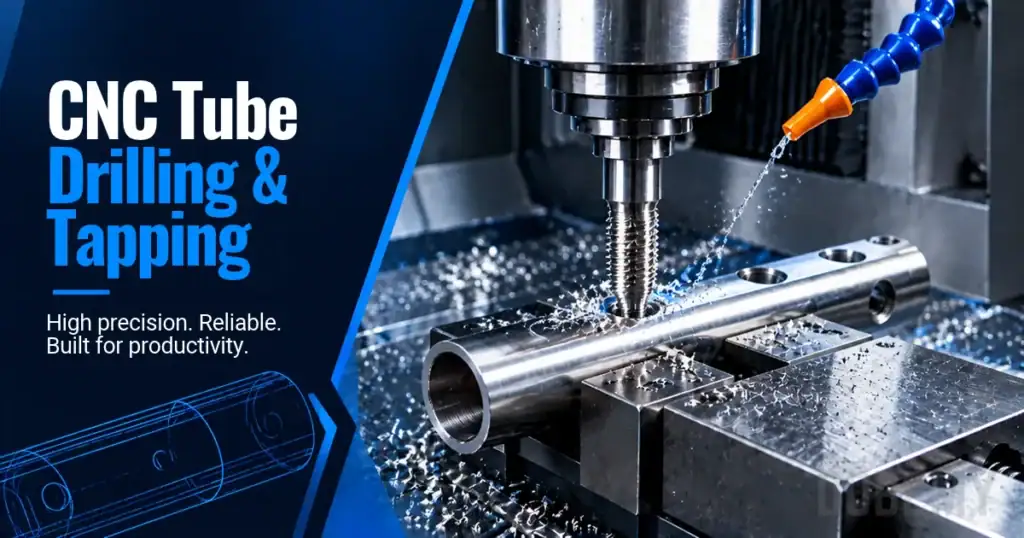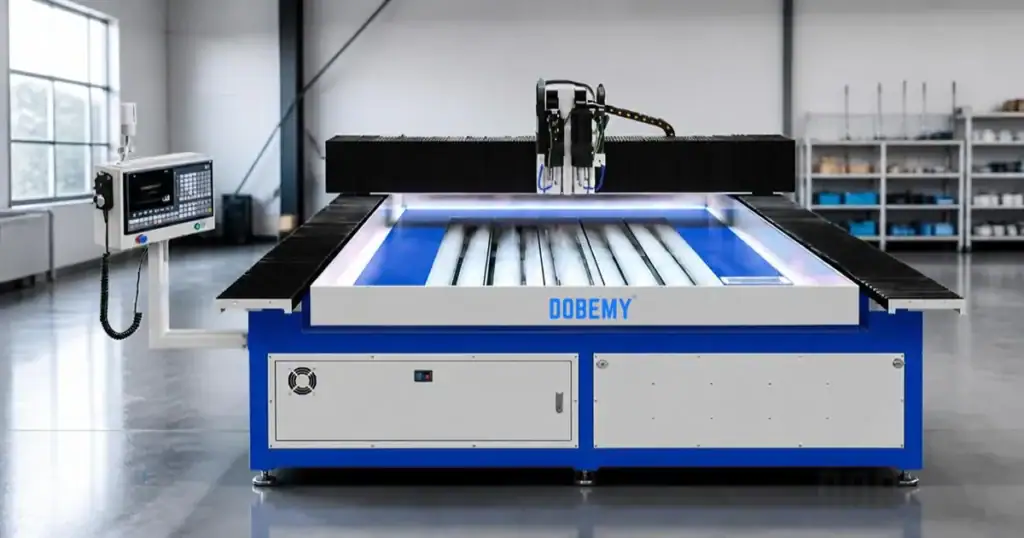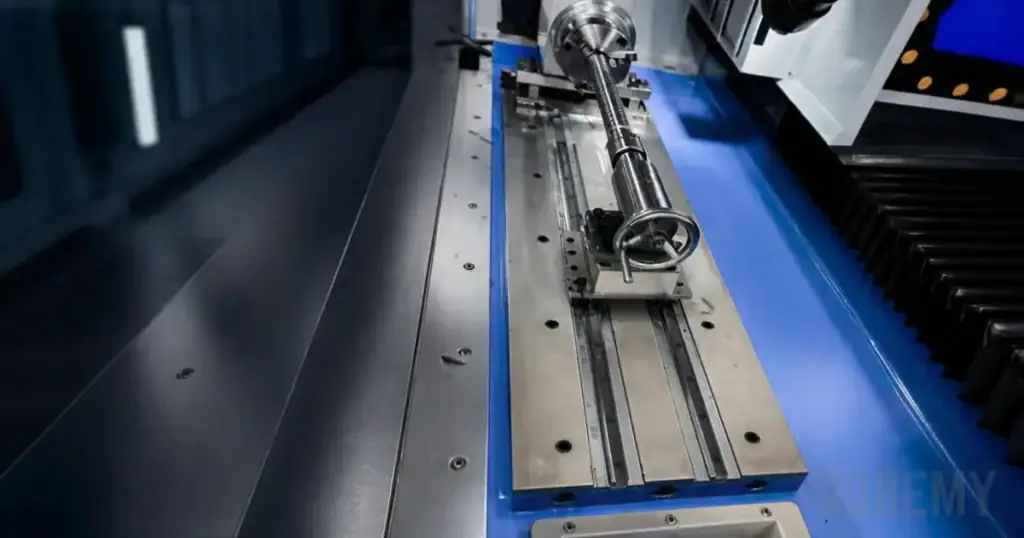


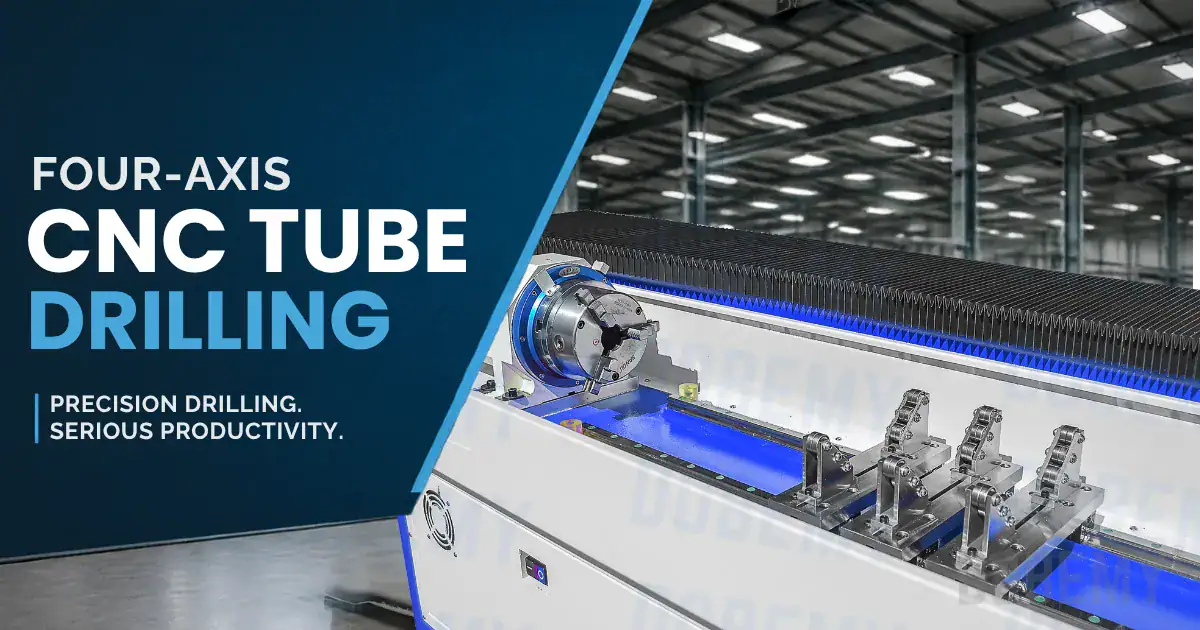
An automatic tube drilling tapping machine drills holes and cuts or forms threads on steel or aluminum tubes in a single clamped setup, replacing the manual drill-press-then-tap workflow common in furniture-frame shops. This article walks through the machine types available, the process decisions that affect thread quality, and the selection criteria that separate a good fit from an expensive mismatch.
Key Takeaways
- An automatic tube drilling tapping machine combines hole-making and threading in one setup, reducing handling steps and improving hole-to-thread alignment on furniture frames.
- Machine architecture—single-head CNC, dual-head, or multi-spindle station—should match your tube profile, hole pattern, daily volume, and changeover frequency.
- Wall thickness determines whether you need conventional cut tapping, form tapping, or flow drilling followed by tapping to get enough thread engagement.
- Workholding design matters as much as spindle capability: thin-wall furniture tubes deform under clamping force, and a deformed tube produces off-center holes and stripped threads.
- Always request a representative-part test on your actual tube material, profile, and hole pattern before committing to a machine purchase.
Why Furniture Frames Need Dedicated Tube Machines
Related guidance: CNC round tube drilling machine.
Furniture frames—office chairs, shelving, bed frames, gym equipment—use round, square, and rectangular tubes that need dozens of holes per assembly. Those holes receive bolts, screws, or threaded inserts that hold the frame together or attach panels, casters, and mechanisms.
Manual drilling and tapping on these parts creates three problems at production scale:
- Positional scatter. Hand-marked or jig-drilled holes drift from part to part, causing misalignment during assembly.
- Thread inconsistency. Hand tapping with a flexible-arm machine depends on operator feel for depth, speed, and alignment. Thread quality varies across a shift.
- Handling time. Moving a tube from a drill fixture to a tapping fixture doubles the touch time per part and introduces a second location error.
A dedicated automatic machine addresses all three by positioning, drilling, and tapping in one clamped cycle under CNC or programmed control. For a furniture factory running hundreds or thousands of frame tubes per day, the labor savings and quality gains compound quickly.
Beyond labor, there is a scrap argument. When a hole lands in the wrong position or a thread strips during assembly, the tube is scrap. On powder-coated or chrome-plated tubes, rework is rarely possible because the finish is already applied. Reducing positional error and thread defects at the machining stage prevents waste downstream.
Machine Architectures for Tube Drilling and Tapping
Not every automatic machine works the same way. The architecture you need depends on your tube geometry, hole count, and production volume.
Single-Head CNC Tube Machines
A four-axis CNC machine uses one spindle that moves along the tube length (X axis), across the tube (Y or Z axis), and into the workpiece, while a rotary A-axis indexes the tube to reach holes at different angular positions around the circumference. The spindle switches between a drill and a tap using a tool changer or a combined cycle.
This architecture suits shops that run many different frame designs in small to medium batches. Changeover means loading a new part program rather than re-tooling a dedicated station. DOBEMY’s four-axis tube drilling and tapping models, for example, use a servo-driven rotary axis with a harmonic reducer for 360° positioning, and they accept round, square, and shaped profiles by changing the clamping tooling.
Single-head machines process one operation at a time, so cycle time per part is longer than on a multi-head machine. For furniture frames with only two to six holes per tube, the difference may not matter. For parts with 20+ holes, it adds up.
One advantage that is easy to overlook: a single-head CNC machine stores part programs. When a customer reorders a frame design you ran six months ago, the operator recalls the program and starts production without re-measuring or re-fixturing. That program recall speed matters in contract furniture manufacturing, where repeat orders arrive on short lead times.
Dual-Head and Multi-Station Machines
Dual-head machines mount two spindle units—often one on each side of the tube—so they can drill or tap two holes at once. The NS Máquinas TDM100 2D AT is one example: it uses two drilling heads with programmable settings and handles round tubes up to Ø114 mm, square tubes up to 100×100 mm, and workpiece lengths up to 3,000 mm. Its published capacity includes drilling up to Ø50 mm and flow drilling/tapping up to M12.
These are manufacturer-stated capacities. Maximum tube diameter, maximum drill size, and maximum tapping size may not all be achievable together or on every material. Ask the supplier to confirm capacity on your specific tube profile, wall thickness, and material.
Multi-station machines go further. They arrange several spindle units—drilling, flow drilling, tapping, punching, cutting—along a transfer line. The tube feeds automatically from station to station. One multi-spindle configuration marketed for office furniture combines flow drilling, tapping, drilling, and cutting heads for round tubes in the Ø33.7–48.3 mm range.
Multi-station machines deliver the fastest cycle times but cost more, take longer to set up for a new part, and suit high-volume production of a narrow range of tube sizes. They also occupy a larger floor area, which matters in factories where space is already tight.
How to Choose Between Architectures
| Factor | Single-Head CNC | Dual-Head | Multi-Station |
|---|---|---|---|
| Best batch size | Small to medium | Medium to large | Large, repeat runs |
| Changeover speed | Fast (program change) | Moderate (head repositioning) | Slow (station retooling) |
| Hole count per part | Low to moderate | Moderate | High |
| Tube variety | Wide range of profiles | Moderate range | Narrow, fixed range |
| Capital cost | Lower | Mid-range | Higher |
| Floor space | Compact | Moderate | Large |
| Operator skill needed | CNC programming | Moderate setup | Line setup and maintenance |
If your factory produces 15 different chair-frame tubes in batches of 200–1,000, a single-head or dual-head CNC machine gives you the flexibility to switch between parts without long changeovers. If you produce one office-chair base tube in batches of 10,000+, a multi-station line pays back its setup cost through faster cycle times.
Many furniture factories fall between these extremes. A common middle path is to start with a single-head or dual-head CNC machine for mixed production, then add a dedicated multi-station line later if one tube design reaches the volume that justifies it.
Thread Process: Cut Tapping, Form Tapping, or Flow Drilling
Related guidance: CNC tube drilling and tapping machine with dual spindles.
The thread method you choose depends on wall thickness, material, and the strength the joint needs.
Cut tapping removes material to create threads. It works on most metals and wall thicknesses, but it produces chips inside the tube that must be evacuated or flushed. For furniture tubes with closed ends or internal baffles, trapped chips can rattle or interfere with assembly. Chip management is a real production concern—not a minor detail—on closed-profile furniture tubes.
Form tapping (thread forming) displaces material instead of cutting it. It produces no chips and creates a stronger thread in ductile materials. It requires a slightly different pilot-hole diameter than cut tapping. Confirm suitability with your tap supplier for the specific tube material and wall thickness. Form tapping also demands higher torque than cut tapping in the same thread size, so the machine spindle and holder must handle that load.
Flow drilling (thermal drilling) uses a rotating carbide tool that generates friction heat to push through the tube wall and form a downward bushing. That bushing adds material thickness, giving the subsequent tap more thread engagement. This matters on thin-wall tubes—typically under 2 mm—where a conventional drilled hole leaves too little wall for a strong thread. Flow drilling followed by tapping is common on furniture tubes for exactly this reason.
Flow drilling does leave a visible bushing on the inside of the tube. On exposed interior surfaces, this may be acceptable or even desirable as a reinforcement. On tubes where the interior must be smooth—such as telescoping tubes that slide inside each other—the bushing can interfere with fit. Consider the assembly requirements before specifying flow drilling on every hole.
According to Sandvik Coromant’s tapping guidance, secure clamping, correct pilot-hole size, appropriate feed, and proper cutting fluid all affect tapping quality regardless of the thread method. These factors apply equally to automatic machines.
Confirm your thread process choice with the tap manufacturer and, if using flow drilling, with the flow-drill tool supplier. Material hardness, tube coating (galvanized, powder-coated, or bare), and wall thickness all influence which process works.
Workholding: The Factor Most Buyers Underestimate
A furniture tube is a hollow, thin-wall part. Clamp it too hard and the cross-section deforms—round tubes go oval, square tubes bow inward. A deformed tube shifts the drill entry point and changes the effective wall thickness at the hole location. The result: oversized holes, off-center threads, and parts that fail at assembly.
Good workholding for tube drilling and tapping addresses these risks:
- Profile-matched clamp jaws that contact the tube over a wide area, distributing force instead of concentrating it at two points.
- Adjustable clamping pressure so the operator (or the machine program) can reduce force for thin-wall sections and increase it for heavier tubes.
- Anti-rotation support that prevents the tube from spinning when the drill or tap engages, without adding a second deformation point.
- Quick-change fixtures that let the shop switch between tube profiles in minutes rather than hours. Rail-mounted pneumatic tooling is one approach; modular V-block systems are another.
- Support near the machining zone. Long tubes flex between clamp points. A support close to the drill location reduces vibration and improves hole quality.
When evaluating a machine, ask the supplier how the workholding handles your thinnest tube. Request a clamping test on a sample tube and measure the cross-section before and after clamping to check for deformation.
For factories that process both round and square tubes on the same machine, the fixture changeover time between profiles is a hidden cost. A 30-minute jaw swap twice per shift adds an hour of lost production every day. Machines with quick-change pneumatic fixtures can cut that swap to under five minutes.
Programming, Changeover, and Daily Operation
Related guidance: flow drilling tapping machine.
The controller and programming interface affect how quickly your operators can set up new parts and how reliably the machine repeats hole patterns across a production run.
Key questions to ask the machine supplier about the control system:
- Can the operator enter hole positions, depths, and thread sizes directly on the controller, or does programming require offline CAM software?
- How many part programs can the controller store? Furniture factories with dozens of active frame designs need enough storage to avoid re-entering programs.
- Does the controller support recipe-based changeover, where the operator selects a part number and the machine loads all positions, speeds, and tool sequences automatically?
- What is the interface language? For factories where operators read Chinese, English, or another language, confirm that the controller supports it.
Controller-dependent features such as torque monitoring, tap-break detection, and automatic depth compensation vary by machine model and configuration. Confirm which features are included on the specific model you are quoting, and ask for a demonstration during the machine trial.
Automatic Tube Drilling Tapping Machine Selection Checklist
Before requesting quotes, gather these details about your parts and production:
- Tube profiles and dimensions. List every round, square, and rectangular tube size you need to process, including outside dimensions and wall thickness.
- Hole pattern per part. Document hole positions, diameters, angular orientations, and whether holes are through or blind.
- Thread specifications. Record thread standard (metric, UNC, etc.), size range, required engagement depth, and whether cut or form tapping is acceptable.
- Material and surface condition. Specify steel grade, aluminum alloy, or stainless steel, plus any coating applied before machining.
- Daily volume and batch size. State how many parts per day and how many different part numbers run per shift.
- Tolerance requirements. Define acceptable hole-position tolerance and thread-gauge pass/fail criteria.
- Automation level. Decide whether you need manual loading, semi-automatic feeding, or a fully automatic feed-and-unload system.
- Floor space and utilities. Measure the available floor area and confirm compressed-air supply, electrical capacity, and coolant drainage.
Send this information to the machine supplier and ask for a cycle-time estimate on your most common part. Better yet, ask for a representative-part test using your actual tube, material, and hole pattern.
What to Verify Before You Buy
Advertised machine capacities—maximum tube diameter, maximum tapping size, spindle speed range—describe the machine’s upper limits, not its performance on your specific part. A machine rated for M16 tapping may struggle with M16 threads in stainless steel tube if the spindle power, rigidity, or coolant delivery does not match the load.
Before signing a purchase order, verify these items:
- Representative-part test results. Did the supplier run your part (or a close equivalent) and share measured hole positions, thread-gauge results, and cycle time?
- Workholding compatibility. Does the standard fixture handle your tube profiles, or do you need custom jaws? What is the cost and lead time for custom tooling?
- Safety guarding. Does the machine include fixed or interlocked guards around the spindle, rotating parts, and chip-ejection zones? OSHA’s machine-guarding guidance identifies point-of-operation, rotating-part, and flying-chip hazards that apply to drilling and tapping equipment. Check your local requirements as well.
- Programming and changeover. Can the operator create and store part programs on the controller? How long does a changeover take between two different tube parts?
- Service and spare parts. Where is the nearest service support? What is the lead time for spindle, servo, and controller spare parts?
- Training and documentation. Does the supplier provide operator training, a maintenance schedule, and a manual in your language?
- Warranty scope. Confirm what the warranty covers—mechanical components, electrical systems, spindle, controller—and for how long. Ask whether the warranty requires using specific consumables or maintenance intervals.
Treat the purchase as a process validation, not a catalog selection. The machine that looks best on a specification sheet may not be the best fit for your tubes, your threads, and your production rhythm. A supplier willing to run your parts and share measured results before the sale earns more trust than one who quotes from a brochure alone.
Ready to find the right tube drilling and tapping setup for your furniture frames? Send us your tube drawing, material, hole sizes, thread sizes, wall thickness, and batch target. Our team will review your application and recommend a machine configuration that fits your production.