

When a tube drilling tapping machine produces broken taps, stripped threads, or oversized holes in stainless steel tube, the cause is rarely one setting. Stainless tapping failures usually involve several linked factors: hole quality, clamping, tap choice, feed synchronization, and chip evacuation. This article walks through a diagnostic sequence so you can isolate the actual problem before replacing parts or changing machines.
Key Takeaways
- Start diagnosis by identifying the thread defect—oversized, undersized, torn, or broken tap—because each points to different root causes.
- A bad drilled hole is the most overlooked tapping problem; check actual hole diameter, roundness, and surface hardening before blaming the tap or machine.
- Stainless steel work-hardens fast, so a dull drill or interrupted feed during drilling can leave a hardened layer that destroys taps.
- Tube workholding must prevent rotation, vibration, and wall distortion without crushing thin walls; poor clamping causes misalignment and tap breakage.
- Always confirm tap type, drill size, cutting parameters, and coolant delivery with your tap and coolant suppliers for the exact stainless grade, thread, and tube geometry you run.
Identify the Thread Defect First
Related guidance: CNC drilling and tapping machine buyer guide.
Different defects point to different causes. Before adjusting anything, pull a sample part and inspect the thread with the correct gauge.
- Oversized thread: Possible causes include wrong tap tolerance class, axial feed error, tap speed too low, or the tap holder allowing the tap to “overcut.” According to Sandvik Coromant’s tapping troubleshooting guide, an oversized thread can also result from using the wrong tool holder type.
- Undersized thread: The material may be closing in after tapping, the tap may be worn, or the drilled hole is too small.
- Torn or rough thread surface: Often caused by built-up edge on the tap, wrong tap geometry for the material, or insufficient lubrication reaching the cut zone.
- Broken tap: Multiple possible causes—undersized hole, chip packing, tap bottoming in a blind hole, misalignment, poor clamping, or excessive speed.
Do not assume a single root cause. A broken tap in stainless tube can involve two or three of these factors at once.
Inspect the Drilled Hole Before Blaming the Tap
The drilled hole is the foundation of every tapped thread. A hole that looks acceptable may still cause tapping failure if the actual diameter is undersized, the wall is out of round, or the drill left a work-hardened surface layer.
Check these on a sample part:
- Measure actual hole diameter with a pin gauge or bore gauge—not the nominal drill size. Stainless can spring back after drilling, leaving a tighter hole than expected.
- Check roundness. A tube wall can deflect during drilling, producing an oval hole that binds the tap unevenly.
- Look for discoloration or glazing inside the hole. A blue or shiny surface suggests the drill rubbed instead of cutting, which work-hardens the stainless and makes tapping far more difficult.
- Verify hole depth in blind-hole applications. Insufficient depth below the thread leaves no room for chips and causes the tap to bottom out.
If the hole fails any of these checks, fix the drilling operation first. A new tap in a bad hole will fail the same way.
Check Tube Workholding and Alignment
Related guidance: DBM-430DT auto CNC drillin g tapping machine.
Stainless tube tapping demands rigid, repeatable clamping. The tube must not rotate, shift laterally, or vibrate during either drilling or tapping. At the same time, thin-wall tube can crush or distort under excessive clamp force.
Signs that workholding is contributing to the problem:
- Witness marks or dents on the tube outer surface near the clamp zone
- Thread position that shifts from part to part
- Tap breakage that happens inconsistently—some parts are fine, others fail
- Visible movement of the tube during the tapping cycle
The clamp must support the tube close to the hole location. A long unsupported span between clamp and hole lets the tube flex, which misaligns the tap and increases side load. If you see inconsistent results, check that the fixture contacts the tube at the correct points and that clamp pressure is set for the wall thickness you are running.
Confirm Tap Selection and Feed Synchronization
Tap type matters for stainless tube
Cutting taps and forming taps behave differently in stainless steel. Cutting taps remove material and produce chips; forming taps displace material without chips. Each type has different hole-preparation, lubrication, and material requirements. Confirm with your tap supplier which type suits your stainless grade, wall thickness, and thread specification.
For cutting taps in stainless, spiral-flute taps are generall y preferred for blind holes because they pull chips upward and out of the hole. Spiral-point taps push chips forward and work better in through holes.
Feed and spindle synchronization
In rigid tapping, the CNC controller synchronizes spindle rotation and axial feed so that feed per revolution equals the thread pitch. If this synchronization is off—even slightly—the tap is forced to cut at the wrong pitch, which raises torque and can break the tap or damage the thread.
For machines using a floating tapping attachment instead of rigid tapping, the feed setting is intentionally different. Sandvik Coro mant recommends 95–97% of pitch feed for floating holders, allowing the tap to generate its own pitch. Do not apply this rule to rigid tapping setups, and do not apply rigid-tapping feed rules to floating holders.
Whether your machine supports rigid tapping or uses a floating holder is configuration-dependent. Confirm the tapping method with the machine documentation before adjusting feed values.
Tube Drilling Tapping Machine Coolant and Chip Evacuation
Related guidance: DBM-2030DT auto CNC drilling tapping machine.
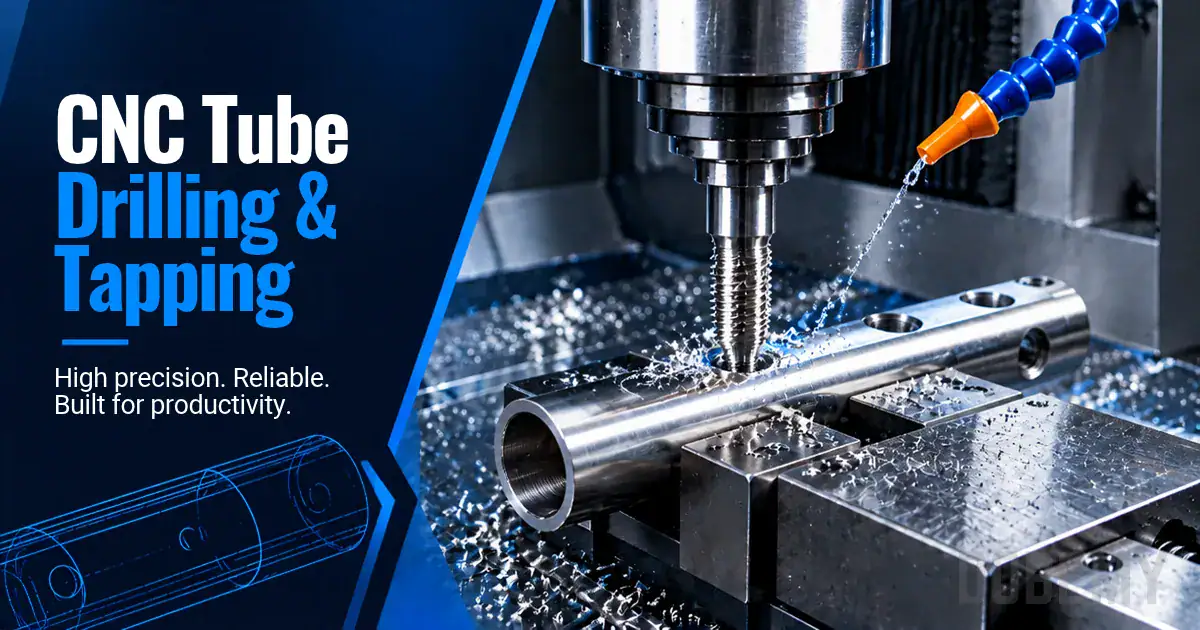
Coolant does two jobs during stainless tapping: it reduces heat at the cutting edge and it helps flush chips out of the flute. When coolant delivery fails, stainless work-hardens faster, built-up edge forms on the tap, and chips pack in the flutes.
Review these coolant factors:
- Delivery method: Through-tool coolant reaches the cutting zone more reliably than external flood, especially in deeper holes. If your machine uses external coolant, check that the nozzle is aimed directly into the hole, not just at the general area.
- Fluid type and concentration: Stainless tapping needs a high-lubricity fluid. Confirm the fluid type and mix ratio with your coolant supplier for the specific stainless grade and tap coating you use.
- Chip evacuation path: In blind holes, chips have nowhere to go except back up the flutes. If you see packed chips in the flutes after a failure, consider whether the tap geometry, peck cycle, or hole depth allowance needs adjustment.
Diagnostic Sequence Summary
Use this order to avoid chasing the wrong cause:
| Step | What to check | What you need |
|---|---|---|
| 1 | Thread defect type | Thread gauge, sample parts |
| 2 | Drilled hole quality | Pin gauge or bore gauge, visual inspection |
| 3 | Workholding and alignment | Fixture check, clamp pressure review |
| 4 | Tap type and condition | Tap supplier data for your grade and thread |
| 5 | Feed synchronization | Machine documentation, controller settings |
| 6 | Coolant and chip evacuation | Nozzle aim, fluid condition, flute inspection |
Work through each step on actual parts before changing parameters. A tap that breaks in a work-hardened, undersized hole will keep breaking no matter how many times you adjust the speed.
Send us your tube material, stainless grade, wall thickness, hole size, thread size, and batch target. We will review your application and recommend a configuration suited to your tapping requirements.