

Your next CNC machine purchase hinges on one critical choice: linear guide vs box way CNC construction. This decision affects every part you produce for the next 15 years. Get it wrong, and you face either sluggish cycle times or premature accuracy loss. Both guide systems move the machine’s axes. Yet they do so with fundamentally different engineering philosophies. Linear guides prioritize speed and acceleration. Box ways deliver rigidity and vibration damping. Understanding these trade-offs helps you match the machine to your actual production needs—not marketing claims.
Linear Guide vs Box Way CNC: Core Engineering Differences
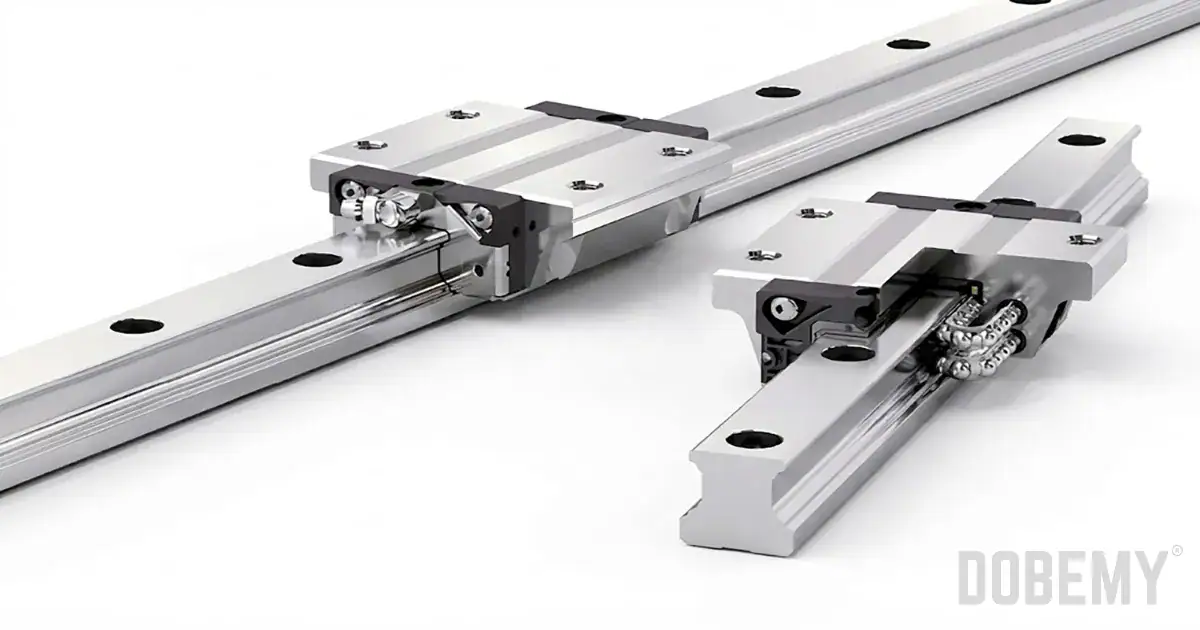
Linear guides use recirculating ball or roller bearings on profiled rails. The carriage glides on these rolling elements with minimal friction. Box ways (also called flat ways or slideways) use large, flat contact surfaces with oil lubrication. The carriage slides directly on hardened steel or cast iron surfaces.
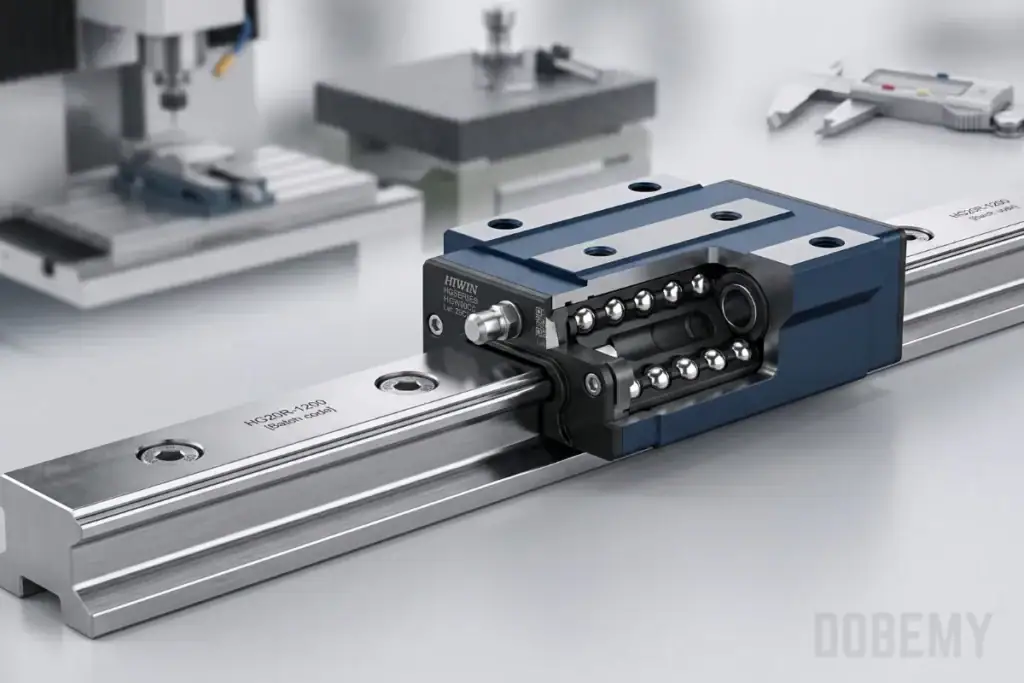
This fundamental difference creates distinct performance characteristics. Linear guides achieve friction coefficients of 0.003–0.005. Box ways operate at 0.05–0.15 friction coefficient—roughly 10–50 times higher. Lower friction means faster acceleration. Higher friction means better damping.
Construction and Materials
Linear guide rails are typically made from hardened steel (58–62 HRC). Common brands include THK, Hiwin, and NSK. The rails bolt onto the machine bed. Box ways are integral to the casting itself. Manufacturers scrape and hand-fit these surfaces during assembly. This process takes 40–80 hours per machine.
The contact area differs dramatically:
- Linear guides: 2–4 cm² per carriage
- Box ways: 200–400 cm² per axis
More contact area absorbs more vibration. Less contact area reduces friction. Neither approach is universally superior.

Speed and Acceleration: Where Linear Guides Excel
Linear guides dominate high-speed applications. Their low friction enables rapid acceleration without excessive motor heat. A typical linear guide machine achieves 1.0–1.5G acceleration. Box way machines typically reach 0.3–0.5G acceleration.
Rapid traverse speeds tell a similar story:
| Specification | Linear Guide | Box Way |
|---|---|---|
| Rapid Traverse (X/Y) | 36–60 m/min | 18–30 m/min |
| Rapid Traverse (Z) | 30–48 m/min | 15–24 m/min |
| Acceleration | 1.0–1.5G | 0.3–0.5G |
| Servo Motor Size | Smaller (lower torque) | Larger (higher torque) |
For tapping and drilling centers processing aluminum or thin-wall parts, speed matters. A tapping center with proper specifications can complete 30–50% more cycles per shift on linear guides. This advantage compounds over years of production. Check out the video below to see the high-speed movement achieved with linear guides.
Real-World Cycle Time Impact
Consider a typical smartphone housing operation. The part requires 47 tapped holes and 12 drilled features. On a linear guide tapping center, non-cutting time drops to 8–10 seconds per part. The same operation on a box way machine takes 15–18 seconds in non-cutting time. Over 100,000 parts annually, this difference equals 200+ hours of production time.
However, cycle time gains only matter if accuracy remains acceptable. Faster machines that produce scrap cost more than slower machines that produce good parts.
Rigidity and Vibration Damping: The Box Way Advantage
Box ways absorb vibration through their large contact surfaces. The sliding friction acts as a natural damper. This characteristic proves critical for heavy cuts in steel, cast iron, and titanium. Linear guides transmit vibration more directly to the workpiece.
Static rigidity measurements show the difference:
- Box way machines: 15–25 N/μm typical stiffness
- Linear guide machines: 8–15 N/μm typical stiffness
Dynamic rigidity matters even more. Box ways maintain accuracy under interrupted cuts. Linear guides can chatter during aggressive face milling. This behavior affects surface finish and tool life directly.
Material Removal Rates
Box way machines handle higher material removal rates in ferrous metals. A box way vertical machining center can sustain 400–600 cm³/min in cast iron. A comparable linear guide machine typically maxes out at 250–400 cm³/min before chatter begins.
For buyers processing different workpiece materials, this distinction matters. Aluminum and brass favor linear guides. Steel and cast iron favor box ways. Mixed production requires careful analysis of your actual part mix.
Accuracy and Long-Term Precision Retention
Initial accuracy favors linear guides. The preloaded bearings eliminate backlash. Positioning repeatability of ±0.002mm is standard. Box ways require careful adjustment to achieve similar numbers. However, long-term accuracy tells a different story.
Linear guide wear patterns concentrate on small contact areas. After 5–7 years of heavy use, accuracy degradation becomes measurable. Box ways wear across large surfaces. The wear distributes evenly. Accuracy loss occurs more slowly and predictably.
Maintenance and Adjustment
Linear guides require replacement when worn. A full set of rails and carriages costs $3,000–8,000 for a typical tapping center. Installation requires precise alignment. Box ways can be rescraped and adjusted. Skilled technicians restore original accuracy at lower cost. This process takes 2–3 days versus 1–2 days for linear guide replacement.
The maintenance requirements differ significantly:
| Maintenance Aspect | Linear Guide | Box Way |
|---|---|---|
| Lubrication Frequency | Automatic (every 15–30 min) | Continuous oil film |
| Lubrication Volume | 0.03–0.05 cc per point | 2–5 liters/day circulation |
| Wear Inspection | Ball track measurement | Surface flatness check |
| Typical Service Life | 15,000–25,000 hours | 30,000–50,000 hours |
| Restoration Method | Replace rails/carriages | Rescrape surfaces |
Cost Analysis: Purchase Price vs. Total Ownership
Linear guide machines cost 15–25% less than equivalent box way machines. The manufacturing process is faster. Assembly requires less skilled labor. Chinese manufacturers have driven linear guide machine prices down significantly. A quality Chinese CNC machine costs less partly due to linear guide standardization.
However, total cost of ownership requires deeper analysis:
5-Year Cost Comparison (Typical Tapping Center)
- Linear Guide Machine: $45,000 purchase + $8,000 maintenance + $6,000 guide replacement = $59,000 total
- Box Way Machine: $55,000 purchase + $5,000 maintenance + $3,000 rescraping = $63,000 total
The gap narrows over time. For 10-year ownership, box ways often prove more economical. For buyers who replace machines every 5–7 years, linear guides offer better value.
Application-Specific Selection Guide
Choosing between linear guides and box ways depends on your specific production requirements. Use this checklist to guide your decision:
Choose Linear Guides When:
- Primary materials are aluminum, brass, or plastics
- Parts require many small features (holes, taps, pockets)
- Cycle time directly impacts profitability
- Cutting depths stay under 3mm typically
- Surface finish requirements are Ra 1.6 or coarser
- Machine will run 1–2 shifts daily
- Budget constraints favor lower initial investment
Choose Box Ways When:
- Primary materials are steel, cast iron, or titanium
- Parts require heavy roughing operations
- Interrupted cuts are common (keyways, slots)
- Cutting depths regularly exceed 5mm
- Surface finish requirements are Ra 0.8 or finer
- Machine will run 3 shifts or 24/7
- Long-term accuracy retention is critical
Many buyers process mixed materials. In these cases, analyze your part mix by volume. If 70%+ of parts favor one guide type, choose accordingly. For truly mixed production, consider different machine types for different part families.
Hybrid Solutions and Modern Developments
Some manufacturers now offer hybrid designs. These machines use box ways on the Z-axis (where rigidity matters most) and linear guides on X/Y axes (where speed matters most). Brands like Mazak and Okuma have popularized this approach.
Roller-type linear guides represent another middle ground. They use cylindrical rollers instead of balls. This design increases load capacity by 30–50% while maintaining speed advantages. Roller guides cost 20–30% more than ball-type guides.
Evaluating Chinese Manufacturers
Chinese CNC manufacturers offer both guide types. Quality varies significantly between suppliers. When finding reliable Chinese suppliers, verify these points:
- Guide rail brand and grade (THK, Hiwin, or equivalent)
- Preload class specification (C0, C1, or C2)
- Casting quality and stress-relief process
- Assembly and alignment procedures
- Accuracy certification per ISO 230-2 standards
Request benchmark testing data before purchase. Reputable suppliers provide ball bar test results and positioning accuracy certificates. These documents reveal actual machine capability beyond catalog specifications.
Making the Final Decision
The linear guide vs box way CNC debate has no universal winner. Each technology serves different production needs. Your decision should follow this process:
- Audit your current parts: List materials, features, tolerances, and volumes
- Calculate cycle time sensitivity: Determine cost per second of machine time
- Assess accuracy requirements: Define acceptable degradation over machine life
- Project maintenance capabilities: Evaluate in-house skills and local service availability
- Model total ownership cost: Include purchase, maintenance, downtime, and replacement
For vertical and horizontal drilling centers, the same principles apply. Vertical machines benefit more from linear guides due to gravity assistance. Horizontal machines often need box way rigidity for heavy workpieces.
Partner with Experts for Your CNC Investment
Selecting the right guide system affects your production for years. The wrong choice costs money through either slow cycles or quality problems. At dobemy.com, we help overseas buyers navigate these technical decisions. Our team understands both engineering requirements and import logistics.
We connect you with CE-certified Chinese manufacturers who build quality machines with proper guide systems. Whether you need linear guide tapping centers for smartphone production or box way machining centers for automotive parts, we match your requirements to capable suppliers. Contact us today to discuss your specific application. Our engineers provide honest recommendations based on your actual production needs—not sales quotas.