

Innovation Trends in Chinese CNC Equipment: Future Factory Outlook
China’s CNC industry is changing fast. Artificial intelligence, IoT sensors, and advanced automation now drive factory operations across the country. These technologies help manufacturers achieve tighter tolerances, faster cycle times, and greater flexibility. For engineers and buyers worldwide, understanding these trends is essential for making smart equipment decisions.
This guide covers the key innovations shaping Chinese CNC manufacturing. You’ll discover AI integration, smart factory examples, and precision achievements. Also, you’ll explore data-driven productivity and tips for choosing equipment.
AI Integration in CNC Machinery
Top Chinese CNC makers now use AI for three main tasks: predictive maintenance, adaptive machining, and process optimization.
Predictive algorithms monitor machine health and tool wear in real time. They detect problems before failures occur. Industry studies show this approach can cut unplanned downtime by 20–35%. Self-optimizing controllers adjust cutting parameters automatically, reducing manual intervention by up to 30% in some implementations.
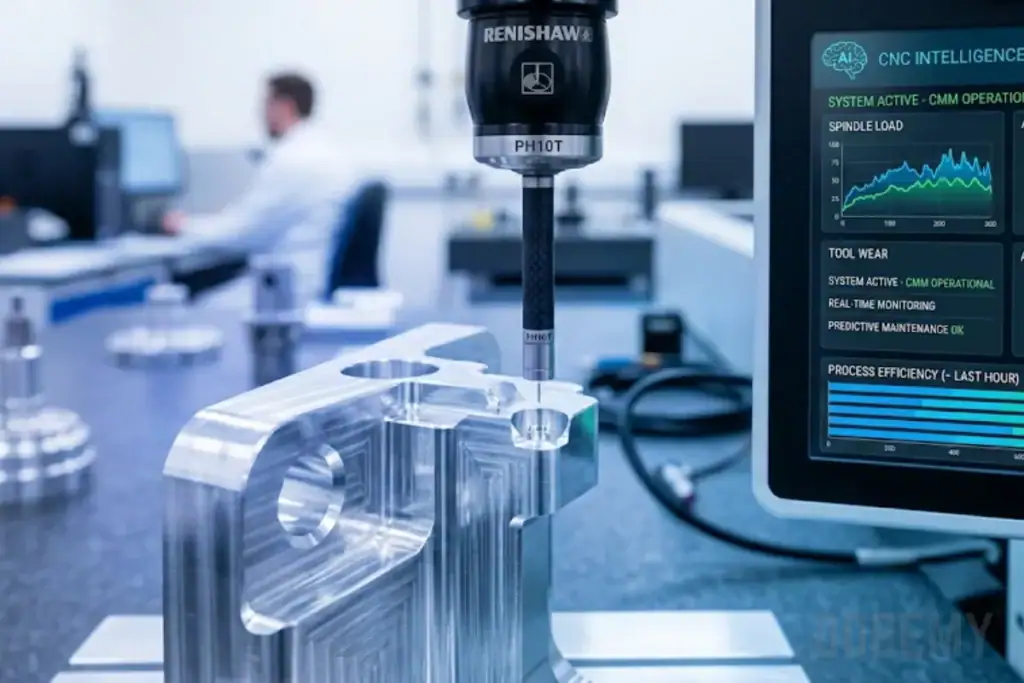
These AI systems learn from each operation. They improve over time, delivering more consistent results across production runs. In high-mix manufacturing, AI keeps quality consistent as it shifts between various parts and materials.
Key benefits of AI integration:
Reduced downtime: Early fault detection prevents costly breakdowns
Lower labor costs: Automated adjustments reduce operator workload
Better tool life: Optimized cutting parameters extend tool longevity
Consistent quality: Real-time corrections maintain tight tolerances
Real-Time Monitoring and IoT
IoT-enabled CNC machines collect data from spindles, axes, and tool holders continuously. Engineers can monitor temperature, vibration, load, and feed rates through connected dashboards.
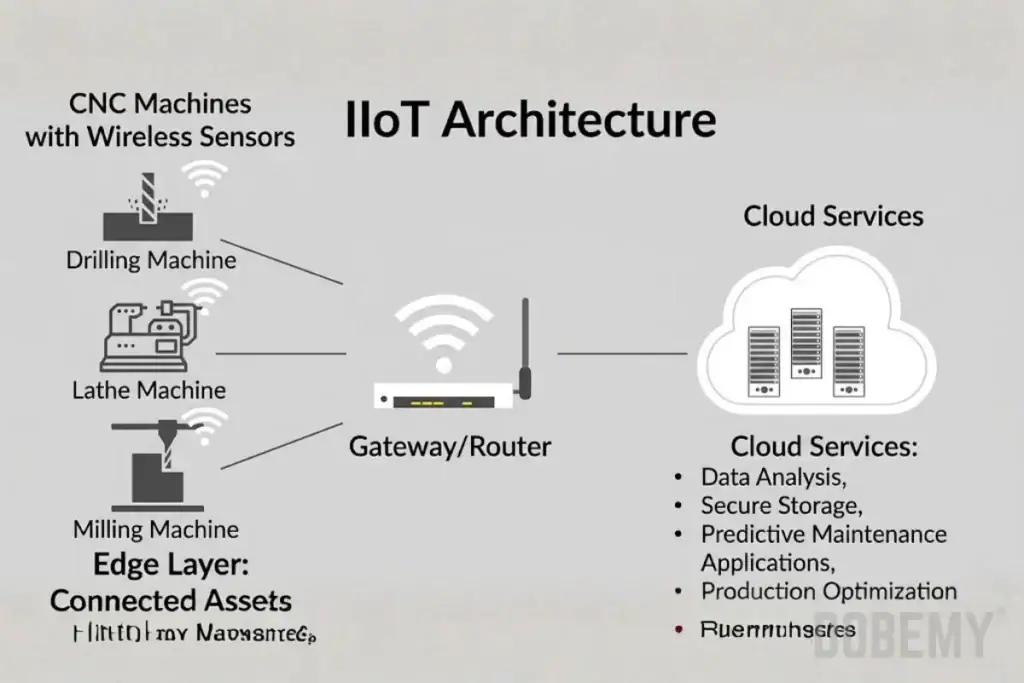
This real-time visibility allows quick responses to problems. When sensors detect anomalies, operators can adjust parameters immediately. The result? Part tolerances stay within ±0.005–0.01 mm, even during high-speed multi-axis operations.
IoT systems also enable remote monitoring. Factory managers can track performance across multiple facilities from a single dashboard. This capability is especially valuable for maintaining CNC machine efficiency across distributed operations.
Digital Twins and Virtual Simulations
Digital twin technology creates virtual copies of physical machines and production lines. Engineers use these simulations to test setups. They also optimize toolpaths and plan production sequences. Best of all, they do this without stopping the machines.
Chinese factories using digital twins report 25–40% reductions in changeover time according to smart manufacturing case studies. This matters for custom orders and batch production changes, where setup delays eat into profitability.
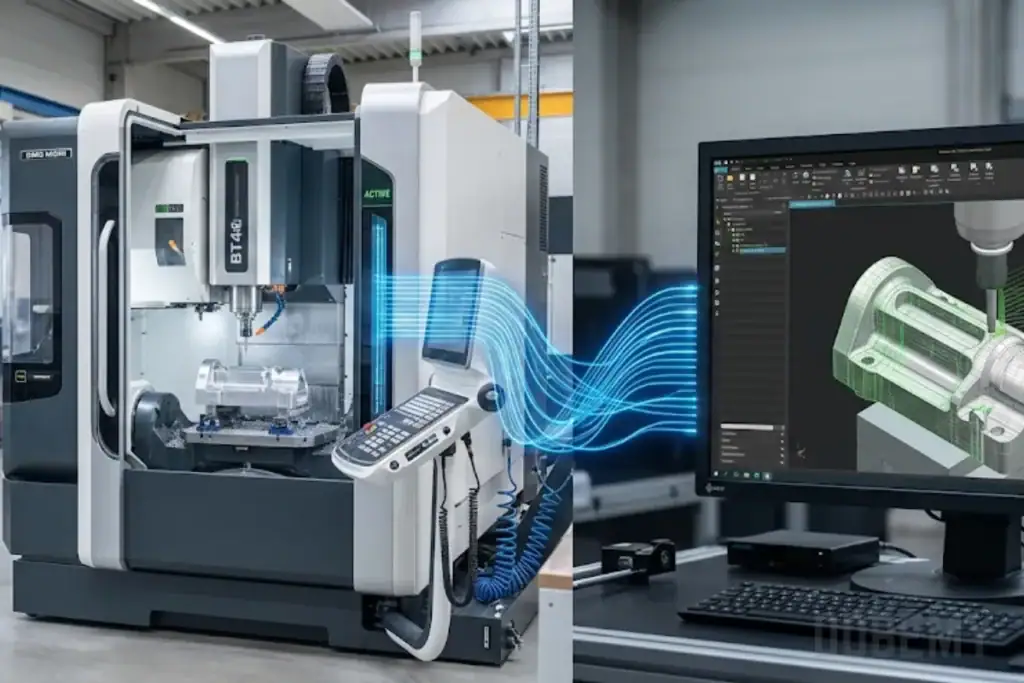
Virtual testing also reduces risk. Engineers can validate new processes before committing expensive materials. They catch programming errors in simulation rather than on the shop floor.
For CNC operations requiring frequent program changes, digital twins offer clear advantages in speed and quality.
Smart Manufacturing: Real-World Examples
Chinese CNC factories use AI, IoT, robotics, and digital twins. They create production systems that work together. Here are practical examples showing measurable results.
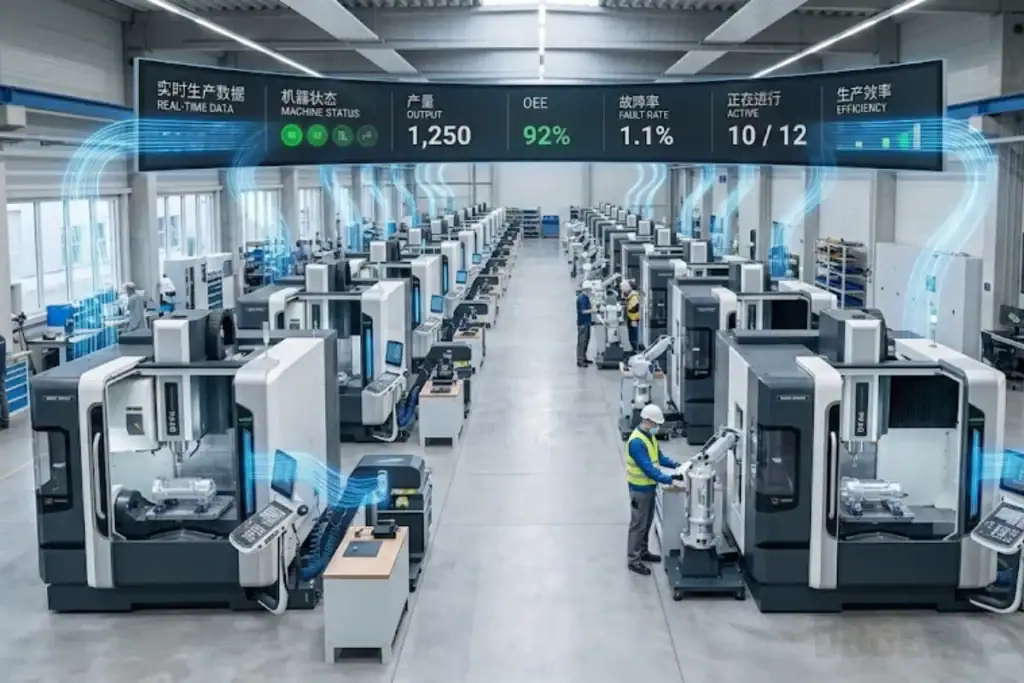
Aerospace Component Production
Leading aerospace suppliers use AI-controlled CNC centers with real-time IoT feedback. These factories maintain tolerances within ±0.003 mm on titanium components under controlled conditions. Predictive maintenance and automated scheduling minimize manual intervention while sustaining high throughput.
Digital twin implementations in aerospace manufacturing have demonstrated changeover time reductions of 30-40%. Quality inspections now happen automatically during machining, not after.
Automotive Parts Manufacturing
Chinese automotive facilities implementing AI scheduling, robotic material handling, and predictive maintenance have achieved significant improvements. Reported results include idle time reductions of 20-25%, tolerances held at ±0.005 mm, and labor intensity reductions of 30-35%. Throughput typically increases approximately 20% with fewer operators.
Robotic Automation Impact
Robotic loading and unloading systems now handle repetitive tasks across many smart factories. These systems can reduce labor requirements by 30-40% in automated production environments while maintaining consistent production rates.
When combined with AI scheduling, robots optimize machine utilization and avoid bottlenecks. Human operators focus on programming, quality control, and exception handling rather than manual material movement.
Precision and Tolerance Achievements
Chinese high-end CNC equipment now achieves tolerance levels comparable to European and Japanese machines under controlled environmental conditions. This precision comes from several integrated technologies working together.
Standard Tolerance Ranges:
ApplicationTypical ToleranceTechnology EnablersAerospace components±0.003 mm*AI compensation, thermal controlMedical devices±0.003 mm*Closed-loop control, vision inspectionAutomotive parts±0.005 mm*Adaptive machining, load monitoringGeneral manufacturing±0.01 mmStandard CNC with IoT monitoring
*Achievable under controlled conditions with proper machine setup, environmental controls (±1°C), quality tooling, and skilled operators.
How Manufacturers Achieve These Tolerances:
Rigid machine structures: Heavy castings and thermal-stable designs reduce vibration
High-quality spindles: Precision bearings and balanced assemblies ensure smooth rotation
Temperature compensation: Sensors detect thermal expansion and adjust tool positions automatically
AI-assisted corrections: Algorithms modify cutting parameters based on real-time load and material behavior
For difficult materials like titanium, Inconel, and ceramics, adaptive toolpath control maintains consistent surface finish and dimensional accuracy with specialized tooling and expertise. Understanding these capabilities helps buyers avoid dimension instability issues that plague lower-quality equipment.
Data-Driven Productivity: KPIs and Benchmarking
Modern Chinese CNC factories track performance metrics continuously. Key Performance Indicators (KPIs) drive decisions about scheduling, maintenance, and process improvement.
Common KPIs and Benchmarks:
Cycle time reduction: AI scheduling and adaptive machining can cut cycle times 20–40% in optimized implementations
Overall Equipment Effectiveness (OEE): Leading factories achieve 85–90%, compared to general manufacturing averages of 60–70%
Maintenance costs: Predictive systems can reduce service costs by 15-25% annually according to industry studies
Scrap rates: Real-time monitoring and correction cut waste significantly
Industrial Data Lakes
Large manufacturers use centralized data systems to consolidate information from multiple production lines. This enables cross-factory benchmarking and process standardization.
When one plant discovers optimal parameters for surface finish, those settings can transfer to other facilities immediately. This approach standardizes quality and improves efficiency across entire organizations.
For manufacturers selecting CNC drilling equipment, data-driven insights help identify machines that deliver measurable productivity gains.
ISO Standards and Export Readiness
Compliance with international standards is essential for Chinese CNC manufacturers targeting global markets. Key standards include:
ISO 230: Specifies performance testing methods for machine tools. Covers geometric accuracy, positioning, repeatability, and dynamic behavior. Machines meeting ISO 230 requirements demonstrate precision suitable for demanding applications.
GB/T 17421: China’s national standard for CNC machinery. Outlines performance, safety, and precision requirements aligned with international benchmarks.
ISO 14649 (STEP-NC): Enables standardized data exchange between CNC machines and digital manufacturing systems. Supports virtual simulations and digital twins across different vendor equipment.
Export Capabilities
Modern Chinese high-end CNC machines increasingly include cloud-based monitoring and remote diagnostics as standard features. These capabilities let manufacturers support customers globally without on-site service visits.
Chinese high-end CNC equipment exports have grown substantially since 2021, driven by smart factory upgrades and international quality certifications. Buyers benefit from internationally recognized quality, remote support, and smart factory integration capabilities.
For information on how AI is transforming CNC programming, see our detailed guide on machine learning applications.
Common Challenges and Solutions
Despite rapid advancement, Chinese CNC factories face operational challenges. Addressing these issues effectively maintains competitiveness.
Skilled Labor Shortages
Finding operators who can manage complex CNC machinery remains difficult. Factories increasingly rely on AI automation, robotic systems, and intelligent scheduling to reduce dependence on manual labor.
Cyber-physical systems enable semi-autonomous operations. Fewer operators can manage multiple machines while maintaining output quality.
Maintaining Precision at High Throughput
Achieving micron-level tolerances while running high-speed production is challenging. Solutions include adaptive machining algorithms, real-time load compensation, and AI-assisted toolpath adjustments.
These systems stabilize accuracy even under variable material properties or cutting loads.
Bottlenecks and Line Balancing
Uneven production flow reduces efficiency. AI-based scheduling and digital twin simulations help factories visualize lines, predict delays, and adjust workloads dynamically.
Flexible response strategies accommodate high-mix, low-volume orders without compromising efficiency.
Legacy System Integration
Many factories operate older CNC machines alongside new AI-enabled centers. Integration requires middleware, IoT retrofits, and standardized communication protocols.
Proper integration ensures centralized monitoring and consistent KPI tracking across all equipment—a common concern when troubleshooting tool magazine failures and other issues.
Future Outlook: The Virtual Factory
The concept of the virtual factory represents the next evolution in Chinese CNC manufacturing. This approach combines AI, digital twins, and cloud connectivity into fully integrated production environments.
Key Elements of Virtual Factories:
Factory-wide digital twins: Simulations cover entire production lines, not just individual machines
Adaptive AI manufacturing: Machines self-correct in real time, maintaining optimal tolerances automatically
Cloud connectivity: Remote management of multiple plants with standardized parameters
Integrated robotics: Self-balancing lines respond to dynamic demand and custom orders
Implications for Buyers
Manufacturers embracing virtual factory concepts achieve higher precision, reduced downtime, and greater responsiveness to market demand. Equipment that supports these capabilities offers better long-term value.
Engineers and managers should prioritize interoperability, data standardization, and scalable architectures when selecting equipment.
How to Choose the Right CNC Equipment
Selecting appropriate CNC equipment requires evaluating technology integration, precision benchmarks, and operational flexibility. Here’s what to look for:
1. Evaluate AI and Automation Capabilities
Look for machines with predictive maintenance, adaptive machining, and self-optimizing controllers. These features reduce downtime and ensure consistent tolerances.
2. Check Digital Twin Support
Machines compatible with digital twin platforms allow virtual setup and process optimization. This capability is essential for high-mix or custom orders.
3. Verify Precision Benchmarks
Ensure equipment meets your tolerance requirements. Aerospace components typically need ±0.003 mm (under controlled conditions); automotive parts may allow ±0.005 mm. Verify machines maintain these specs under variable cutting loads with proper environmental controls.
4. Confirm Standards Compliance
Machines should comply with ISO 230 and relevant national standards. For export applications, ISO 14649 (STEP-NC) compatibility ensures interoperability.
5. Assess Scalability and Data Integration
Select equipment that integrates into IoT networks and centralized dashboards. Scalable machines allow multi-factory optimization and standardized production parameters.
For comprehensive guidance on selecting drilling and tapping equipment, see our CNC drilling machine buying guide.
Final Thoughts
Chinese CNC equipment has advanced significantly. AI integration, IoT monitoring, and digital twins now deliver precision and productivity that compete with global leaders.
For engineers and buyers evaluating equipment options, focus on technology capabilities, standards compliance, and long-term scalability. Machines supporting virtual factory concepts offer the best foundation for future growth.
The key is matching equipment capabilities to your specific production requirements—and understanding how smart manufacturing technologies can help you achieve your goals.